


Sea Turtle Hatchings - Do's and Don'ts
Sea turtle season in spans from May 1 to October 31. During this period, female sea turtles come ashore, primarily at night, to lay their eggs in sandy areas above the high tide line. Nesting activity typically occurs from May through August, with Loggerhead turtles being the most common species in this region. The eggs incubate for 50 to 70 days, and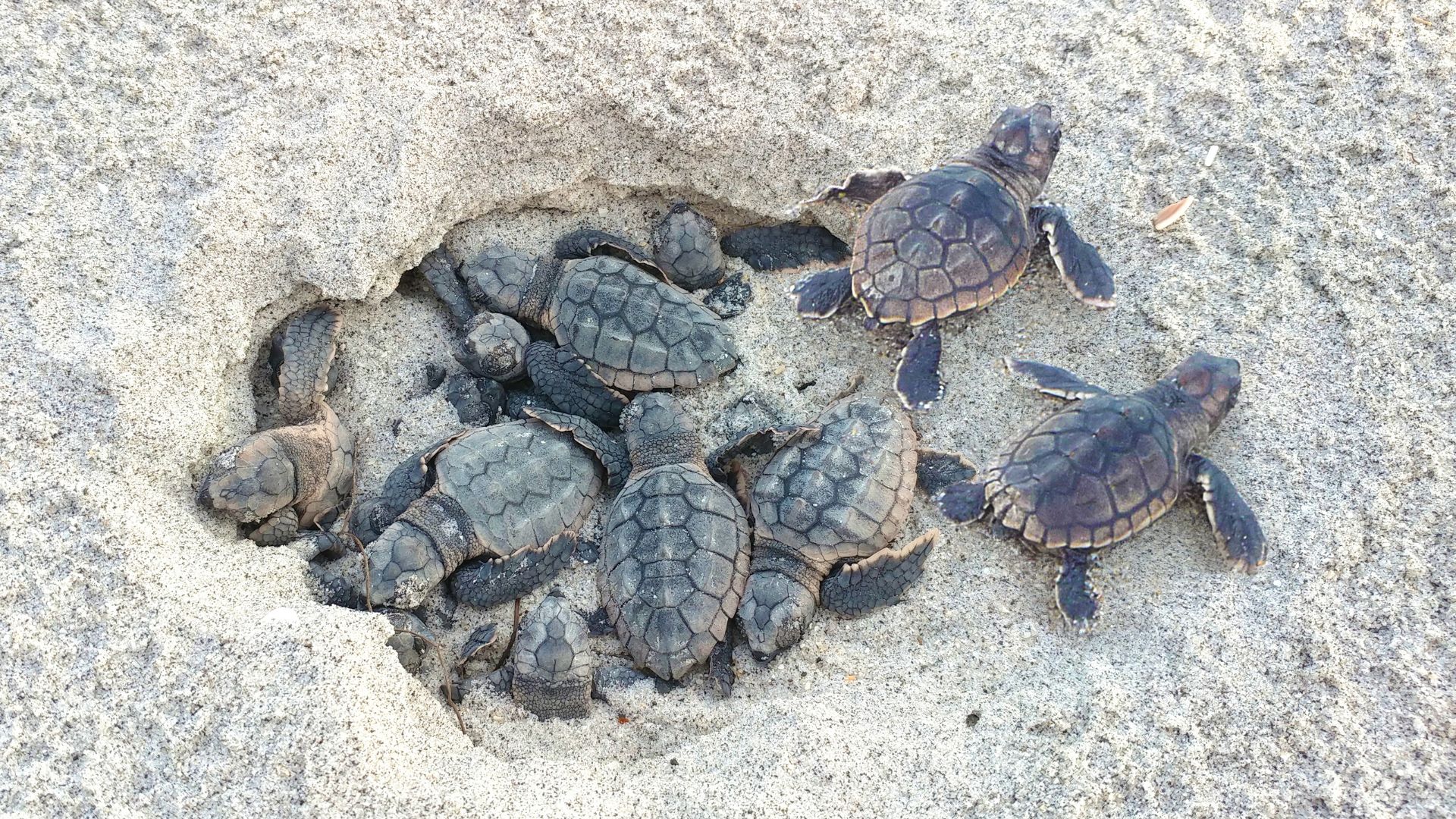 hatchlings emerge from July to October, making their way to the Gulf guided by the natural light of the moon.
Conservation efforts are crucial during this season. Artificial lights from flashlights, phones, or beachfront properties can disorient turtles, so keeping beaches dark is essential. Obstacles like beach furniture should be removed at night to ensure turtles have a clear path. Marked nesting areas should remain undisturbed, and filling in any holes on the beach helps prevent trapping hatchlings or nesting turtles. Local conservation groups like Share the Beach play an active role in protecting turtles and often organize events where visitors can observe hatchling releases.
Sea Turtles find their way to the ocean by moonlight and starlight. This is why it's extremely important to not use regular flashlights at night on the beach. These lights can make them become disoriented. Hatchlings can die of dehydration if they do not reach the water quick enough.

How to Help Them
- Turn off outside lights that disorient them (only use red/amber lights on the beach). You can purchase these lights in many stores here.
- Turn off balcony lights at night.
- Stay at least 30 feet away from nests and remain quiet.
- Report a turtle hatching, injured or distressed turtle at the Alabama Sea Turtle Hotline at 1-866-SEA-TURTLE.