


Imagine owning a piece of property only to discover someone pretending to be you has tried to sell it.
It sounds far-fetched, but seller impersonation and fraudulent property transfers have become a very real concern in real estate—particularly with vacant land, properties without mortgages, and homes that aren't owner occupied.
Alabama is taking action.
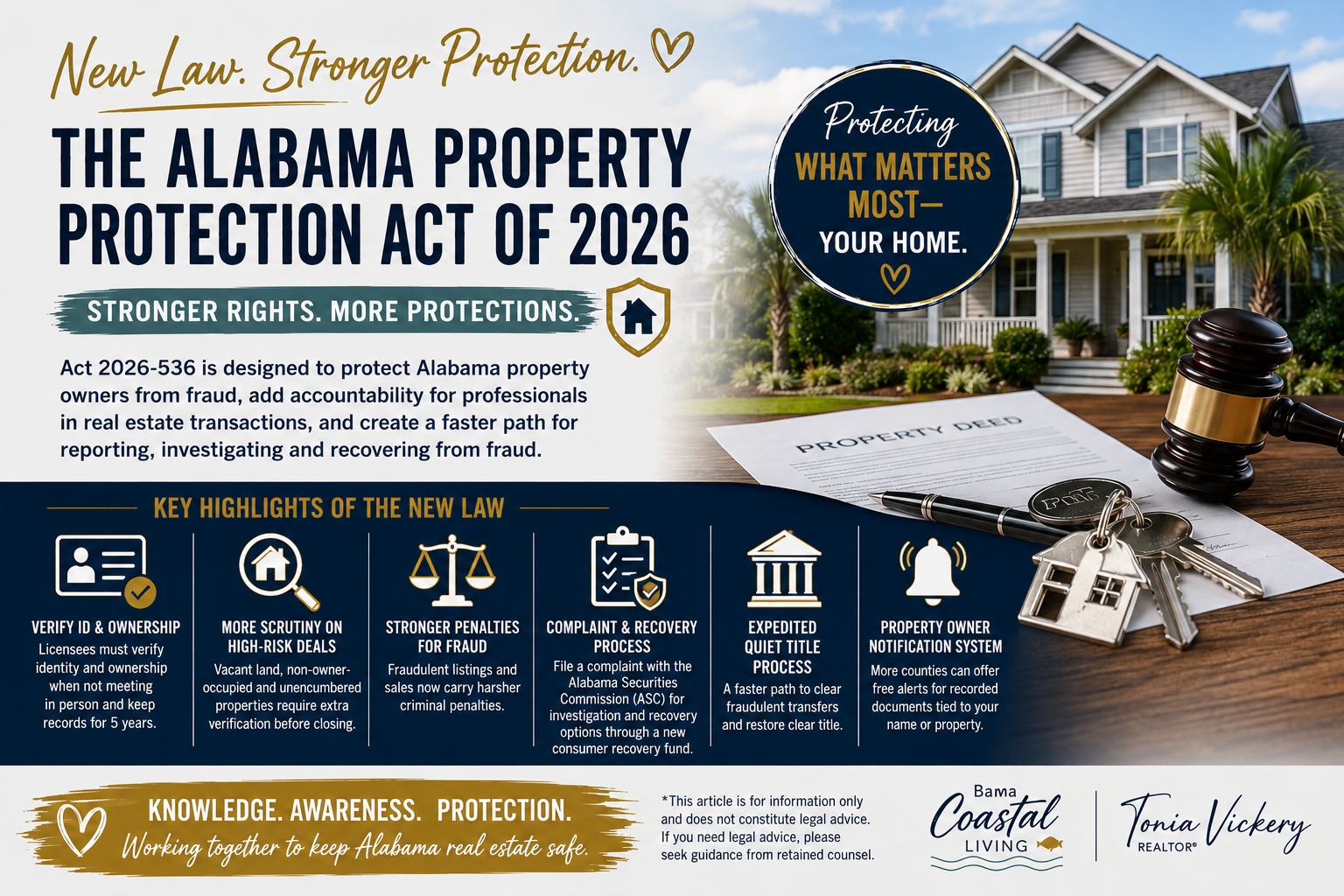
The Alabama Property Protection Act of 2026 creates new safeguards aimed at making it harder for scammers to impersonate property owners, fraudulently list property and transfer real estate they don't actually own. The new law takes effect October 1, 2026.
Why This New Law Matters
Real estate fraud has gotten increasingly sophisticated. A scammer doesn't necessarily need to break into your home—or even live in Alabama—to attempt to steal your property.
A common concern involves someone posing as the owner of a property, contacting a real estate professional remotely and attempting to list and sell it. Vacant land can be particularly attractive because there's no homeowner living on the property to notice something is wrong.
The new law adds verification requirements throughout the transaction while also creating stronger remedies for property owners who become victims of fraudulent conveyances.
Sellers May Be Asked to Prove Who They Are—and That They Own the Property
One of the biggest changes involves seller verification.
When a real estate licensee doesn't know the purported seller AND isn't meeting that seller in person, the licensee must obtain government-issued identification as well as documentation showing that the seller owns the property.
If those documents aren't provided, the licensee cannot list the property for sale or lease.
Certain Properties Will Get Extra Scrutiny
The law recognizes that some transactions may carry a higher risk of fraud.
Additional verification before closing will be required for:
- Vacant land
- Non-owner-occupied property
- Property without a mortgage
For these transactions, the settlement agent must confirm the seller's identity and ownership before the transaction can be completed.
For legitimate property owners, it may mean an additional verification step. For someone pretending to own your property? That's another hurdle they have to get past.
The Penalties for Property Fraud Are Getting Much More Serious
Alabama is also putting more teeth behind its fraud laws.
Someone who intentionally lists or advertises residential real estate for sale while knowing the purported seller doesn't have legal title or authority to sell it can face a Class D felony.
The offense can rise to a Class C felony if the person receives money connected with the fraudulent sale or defrauds a true property owner who is 70 or older.
Victims Will Have a New Avenue for Help
One of the most important parts of the Act is what happens after fraud occurs.
A property owner who believes they've been the victim of a fraudulent conveyance will be able to file a complaint with the Alabama Securities Commission (ASC).
The ASC will have authority to investigate and, when fraud is established, can take actions that may include invalidating the fraudulent conveyance, restoring ownership to the rightful owner, imposing civil penalties and potentially compensating the owner for certain economic losses.
The Act also establishes a consumer recovery fund funded through enforcement actions, penalties and forfeitures rather than taxpayer appropriations.
A Faster Way to Clear a Fraudulent Title
Anyone who has dealt with a title problem knows how complicated it can become.
The new law establishes an expedited quiet-title process for fraudulent conveyances. After the ASC issues a final order, a property owner can take that order to circuit court to enforce the decision and restore title.
The goal is to provide a faster pathway for legitimate owners to clear fraudulent transfers from the property record instead of leaving them trapped in a lengthy dispute.
Online Listings and Property Photos Are Addressed Too
The Act doesn't stop at the closing table.
MLSs and other online real estate listing platforms must have procedures designed to reduce fraudulent listings. When a listing comes directly from a consumer rather than a real estate licensee, the platform must verify that person's identity and property ownership.
There's another interesting provision for homeowners: an owner can request that an online listing platform remove interior photographs of their property from public display. After verifying the person's identity and ownership, the platform must remove those interior photos within 30 days.
Baldwin County Homeowners Already Have Another Tool Available
This part is especially relevant here on the Alabama Gulf Coast.
The Act provides a framework for expanding property-owner notification systems across Alabama—and Baldwin County is one of the counties that already has such a system.
These free services allow property owners to enroll for notifications when certain land records—such as a deed, lien or mortgage—are recorded with the local probate court in connection with their name or property.
That's a simple layer of protection worth knowing about. An alert doesn't necessarily mean something fraudulent has occurred, but it can give a property owner an opportunity to spot suspicious activity much sooner.
The site for this is https://baldwincountyal.gov/government/probate-office/recording.
The Bottom Line
This isn't a law designed to make legitimate real estate transactions unnecessarily difficult. It's designed to make fraudulent ones harder.
For Alabama property owners, the Alabama Property Protection Act creates more safeguards around identity and ownership, stronger penalties for people attempting fraudulent sales, and better options for victims if fraud does occur.
And for those of us working in real estate, it reinforces something that has become increasingly important: know who you're dealing with, verify ownership and don't ignore the red flags.
A few extra verification steps are a small price to pay when what's being protected could be someone's home, investment property or land.
This article is provided for general informational purposes only and does not constitute legal advice. For questions about how the Alabama Property Protection Act may apply to a specific situation, consult qualified legal counsel.