
If you're lucky enough to own a FORTIFIED home, congratulations. Not only are you better protected against severe weather, but you're likely enjoying lower insurance premiums and added value when it comes time to sell. But here's something many homeowners don't realize:
You can accidentally jeopardize your FORTIFIED designation by making certain changes to your home.
Before you start planning that porch expansion, replacing windows, or hiring a contractor for roof work, there are a few important things every FORTIFIED homeowner should know.
What Exactly Is a FORTIFIED Home?
FORTIFIED is a nationally recognized construction and roofing standard developed to help homes better withstand hurricanes, high winds, and severe weather. Along the Gulf Coast, a FORTIFIED designation can provide significant insurance discounts and is often a major selling point for buyers. However, maintaining that designation requires following specific guidelines.
Before You Make Changes, Do This First
One of the biggest mistakes homeowners make is assuming that any contractor can perform work on a FORTIFIED home.
Not so fast.
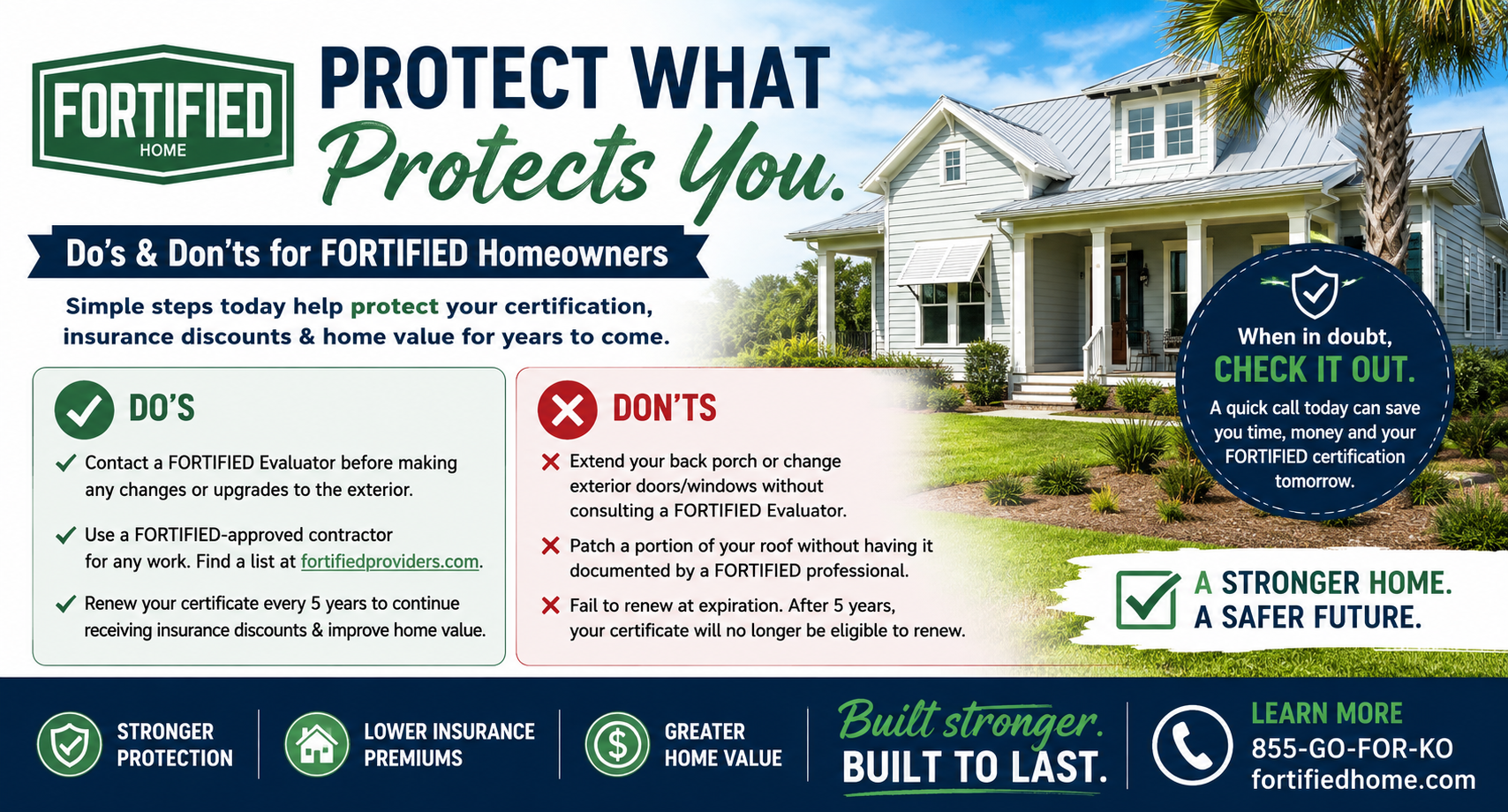
Before making any exterior modifications, contact a certified FORTIFIED Evaluator. They can help determine whether the planned work could affect your certification and what steps need to be taken to keep your designation intact. It's also important to use contractors familiar with FORTIFIED requirements and approved methods when performing work on the home.
Changes That Can Cause Problems
Some common projects that may affect your certification include:
- Extending or enclosing a back porch
- Replacing exterior doors
- Installing new windows
- Installing a Doggie Door
- Making structural exterior modifications
- Roof repairs or roof patching
Even seemingly minor changes can impact your home's compliance if they aren't properly documented and reviewed. Think of it this way: your FORTIFIED designation isn't just about what was built originally—it's about maintaining those standards over time.
Don't Forget About Roof Repairs
This one surprises many homeowners. If a portion of your roof is repaired or patched, the work should be properly documented by a FORTIFIED professional. Making repairs without documentation could create issues when it's time to verify or renew your certification.
Your Certification Doesn't Last Forever
Another important reminder:
FORTIFIED certificates must be renewed every five years.
Many homeowners don't realize that if they allow their certificate to expire, it may no longer be eligible for renewal. That could mean losing valuable insurance discounts and the marketing advantage that comes with having a verified FORTIFIED home.
Why This Matters
Along the Alabama Gulf Coast, FORTIFIED homes have become highly desirable. Buyers often specifically ask about FORTIFIED roofs and certifications because they understand the potential insurance savings and added storm protection. Protecting your certification protects your investment.
Bottom Line
Before making exterior upgrades, replacing windows or doors, repairing your roof, or starting that next home improvement project, take a few minutes to consult a certified FORTIFIED Evaluator. A quick phone call today could save you from losing valuable benefits tomorrow. Because when it comes to FORTIFIED homes, the smartest improvement you can make is protecting the certification you've already earned.